YY mark
YY Method™

The YY Method™

Precise. Technical. Leave the truth behind you.

YY left YY right
Professional v1.0–v2.3 · in professional use YY Method Home · independently active

What Is the YY Method?

The YY Method is a personal professional methodology for extracting, structuring, and preserving institutional knowledge — specifically the knowledge that normally exists only inside people's heads.

The same failure shows up repeatedly across teams and codebases: the reasoning behind why systems were built the way they were, what constraints shaped decisions, how the organization actually thinks — trapped in individuals, undocumented, decaying. When people leave, when projects change hands, when AI tools are introduced, that invisible knowledge becomes a critical liability.

The YY Method is a repeatable, disciplined approach to solving that problem.

The Professional Relationship

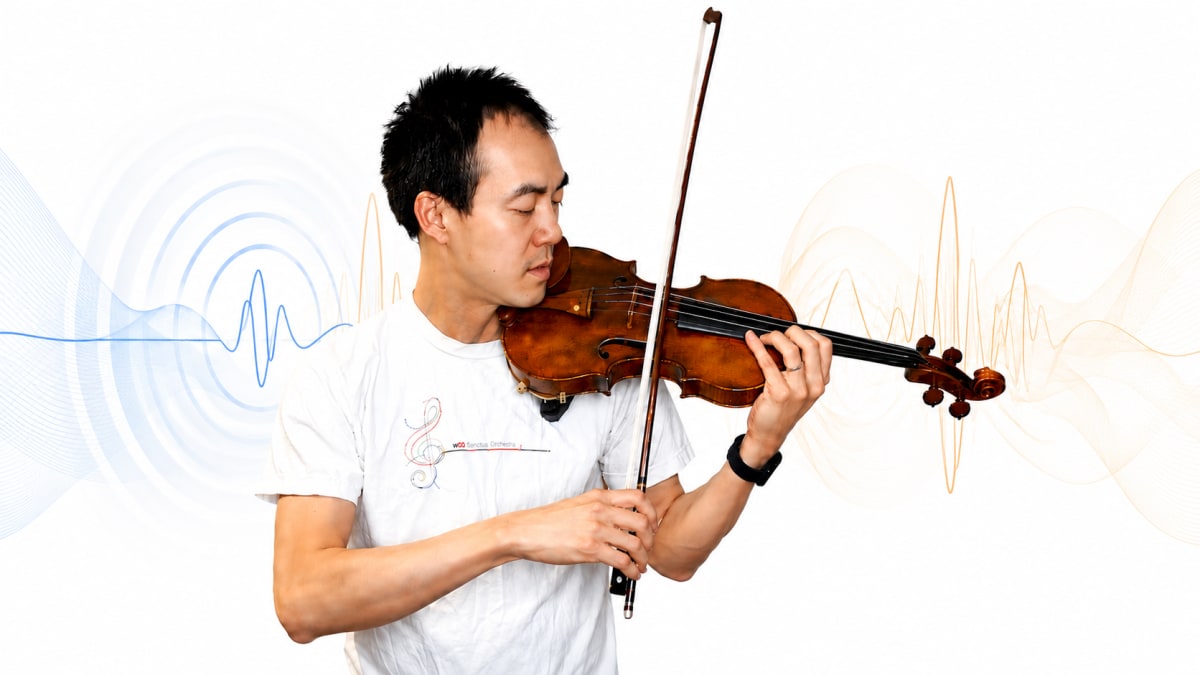
Think of a violinist hired to join a professional orchestra as its concertmaster. She brings her own instrument, her own technique — years of craft developed across many ensembles. The orchestra hires her not because they lack musicians, but because they need someone with the precision and leadership to shape how the whole section sounds.

The music she helps produce belongs to the orchestra. When she moves on, the recordings stay. The repertoire stays. The ensemble she helped sharpen stays. Her instrument goes with her. So does her methodology.

The work product stays with the organization. The ability to produce it does not. A practitioner's methodology is not the engagement they delivered with it.

The Core Asset

The ability to encode institutional knowledge into structured formats that are readable by both humans and AI systems.

This is not documentation. It is the disciplined process of entering an environment — a codebase, a team, an organization — and extracting the reasoning that makes that environment coherent to those who built it, then encoding it in a form durable enough to survive their absence.

Most environments teach people what to do. This method encodes how to think in context.

Human First, AI Second

Human captures. AI reads.

AI is powerful against well-structured knowledge and destructive against incomplete or ungrounded knowledge. It will hallucinate explanations, infer false intent, and produce confident summaries that are wrong in ways that are hard to detect until something breaks. The hallucinations are coherent. That is what makes them dangerous.

After human capture, AI can synthesize, cross-reference, flag inconsistencies, and query across the full artifact set. In a hierarchical system, AI's active role is question generation: when an upstream artifact changes, AI identifies affected downstream nodes and surfaces the specific questions a human must answer to re-verify each one. It does not answer those questions. It makes sure they get asked.

The Common Failure Mode

Someone asks AI to summarize what the team knows before any artifacts exist. The AI produces a plausible summary from code and partial documentation. That summary gets treated as a knowledge artifact. It is not. It is an inference with no Why-Not, no constraint marking, no freshness boundary.

Human captures → AI reads. Not: AI drafts → human reviews. The second sequence looks like efficiency. It is a quality inversion.

The Core Loop: Capture → Why → Why-Not → Commit → Timestamp

Capture → Why → Why-Not → Commit → Timestamp
  1. 1
    CaptureState what is actually known about a system, decision, or constraint. Not what the documentation says. What is actually true, including what lives only in someone's head.
  2. 2
    WhyRecord why the decision was made, why the system works the way it does, why the constraint exists. This is the first branch.
  3. 3
    Why-NotRecord what was considered and rejected, what the decision depends on being true, what would break it. This is the inversion step. It is not optional.
  4. 4
    CommitEncode the result into a structured artifact: a reasoning chain that can be queried. A durable, timestamped act of record.
  5. 5
    TimestampMark when this was captured, by whom, under what conditions. Knowledge has a freshness boundary. Mark it — not just with a date, but with a defined expiration condition: the event that would make this artifact stale. Without that, a freshness marker is theater.

The Why-Not step is what separates this from standard documentation. Standard documentation records what is. The YY Method records what is, what was considered against it, and what it depends on. That difference is the difference between a knowledge artifact that is useful and one that is hazardous when fed to an AI or handed to a new engineer.

The Knowledge Hierarchy

Organizational knowledge is not flat. It should not be stored flat.

Foundational principles sit at the top of the tree. Decisions descend from them. Implementations descend from decisions. Each node depends on the integrity of what is above it. When a root assumption changes, everything downstream is potentially stale — and the system should say so.

The YY Method structures knowledge this way intentionally. Every artifact carries a position in the hierarchy. When an upstream artifact is revised — a changed constraint, an updated principle, a superseded decision — a reverify flag cascades to all dependent nodes. AI surfaces the affected artifacts and generates the clarifying questions. Humans review and approve. The tree stays honest.

The Cascade Model

A change to a founding principle does not silently invalidate six months of downstream decisions. It triggers a structured review: AI identifies what depended on the changed artifact, drafts the questions that need human answers, and holds the downstream nodes as unverified until a human signs off. Nothing is force-updated. Nothing is silently stale.

The sequence: upstream changes → AI flags dependents → human approves each layer → tree re-stabilizes. Not: edit one thing, assume everything else still holds.

The payoff is not just accuracy. It is speed. When principles are already encoded, externalized, and traceable through every layer of the hierarchy, new decisions do not require reconstructing context from scratch. The reasoning is already cached. The lens is already focused. Alignment with current vision becomes a lookup, not a meeting.

This is the difference between a company that thinks clearly at scale and one that re-litigates the same foundational questions every time circumstances change.

What the Method Does

It notices where tribal knowledge is dangerously concentrated. It extracts the reasoning behind decisions that appear arbitrary from code alone, including constraints that shaped them and the assumptions a new engineer would get wrong. It structures that reasoning into a compressed, accurate chain — decisions connected to constraints, alternatives, and freshness boundaries. It preserves the negative space: what was tried, what failed, what was ruled out. It enables onboarding and AI queries that do not depend on the original engineers being present.

What the Method Produces

Applied to a software system or organization, the YY Method produces structured knowledge artifacts: encoded records of a system's reasoning chain, decision history, constraints, intent, and tribal context.

Layer What It Captures
Decision recordWhat was decided, when, by whom, under what constraints
IntentWhat problem the decision was solving; what outcome was expected
ConstraintsWhat shaped the decision — technical, organizational, historical
Rejected alternativesWhat was considered and not chosen, and why
AssumptionsWhat the decision depends on being true; what breaks it if those change
Tribal contextWhat the team knew that wasn't written down
Freshness markerWhen this was captured; what may have changed since

These artifacts are queryable by developers, readable by AI systems, durable across personnel changes, and auditable — the reasoning is visible, not just the conclusion.

How Extraction Works

People who hold tribal knowledge are rarely aware they hold it. Extraction surfaces what is invisible to the person holding it. Four prompts do most of the work:

What the Method Protects Against

Compliance Criteria

YY artifacts are evaluated against six criteria.

Criterion What It Requires
CompressionDistills to the essential reasoning chain — not a documentation dump
ScarsIteration history is visible; earlier versions and corrections preserved, not erased
SurvivabilityHolds under personnel turnover, organizational change, and time
ExplainabilityLegible to a new engineer without supplemental context from the original author
TimestampingWhen captured, when last verified, when conditions changed
DisciplineApplied consistently — part of a repeatable practice, not a one-off effort
6/6 = compliant 4–5/6 = salvage ≤3/6 = discard or redo

Artifact Security and Knowledge Custody

Knowledge artifacts produced by this method are organizational assets. They contain extracted reasoning, historical constraints, and tribal context that took years to accumulate and hours to encode. That content must not travel through repositories into the open.

The rule: artifacts live outside commits.

A repository is a shared, versioned, often-connected surface. Any artifact committed to a repository — internal or external — is one misconfiguration away from exposure. That is not an acceptable custody model for knowledge that represents genuine organizational IP.

The correct model is local encrypted storage with controlled access:

What This Method Is Not

The method sits at the intersection of these adjacent practices without collapsing into any of them. It is specifically about the preservation and structure of reasoning — not just content, process, or capability.

Philosophical Character

This method is grounded. Technical, practical, systems-oriented. Human-aware without being sentimental. Careful with ambiguity — not as a hedge, but because ambiguity in a knowledge system is a specific kind of risk.

Most practitioners are good at one part of this. Strong engineers understand systems but rarely encode reasoning in a form that survives them. Strong writers document what exists but cannot capture what was rejected. Strong AI practitioners build tooling but cannot make the grounding that makes it trustworthy. The method requires the combination: technical depth, careful judgment, and structural discipline applied repeatably across different environments.

It is not mystical. It does not invoke the future of work. It is a specific, repeatable capability that addresses a specific, recurring problem. That is enough.

Provenance

The YY Method v2.3 is a personal professional methodology developed independently. Lineage traces to v1.0 (August 6, 2025). v2.0 formalized the professional knowledge systems application. v2.1 expands the articulation without changing the method. v2.3 moves verbatim extraction question text to the private key — names remain public, script does not.

This version is publicly practiced and documented. When the method is applied within a professional engagement, the methodology remains personal professional know-how. The knowledge artifacts produced in that engagement are shaped by and belong to that organization's context.

Human authorship: method, structure, and all core content by Ben Chan. AI role: formatting, compression, structural consistency — subordinate throughout. Chain: continuous from v1.0 through v2.3, version-controlled and shared with formal practitioners.

The method takes its name from YY — a stuffed squirrel that served as a thinking partner long before any of this was formalized. The name stayed because the artifact came first. The framework followed. That sequence is intentional: this method is grounded in something real, not assembled from theory. The full origin lives at yyand.me.

Method Tracks

YY Method (Professional)

in professional use

The organizational track — carried into professional practice as a company asset. Independent development of this track is closed at v2.3. The practitioner retains the right to apply this version in advisory roles; any derivative developed during professional engagement belongs to the organization.

independent lineage closed March 2026

YY Method Home

active

The personal track — applying the method to individual domains requiring judgment under constraints: tax strategy, system design, creative work, and life architecture. Produces ADRs and structured case studies capturing complete reasoning chains.

Preserve judgment under constraint.

home.yymethod.com →

Public Notice

The YY Method's professional track enters formal professional use at v2.3, March 2026 — carried into a professional engagement as an organizational asset. Independent development of that track does not continue. The practitioner retains the right to apply v2.3 in advisory and consulting roles; the boundary is what was developed to this point. Anything developed beyond v2.3 during professional engagement belongs to that engagement.

The Home track is retained as independent personal intellectual property. It is teachable and licensable at the practitioner's discretion. Any paid work engaging the Home track does so under a license granted by the practitioner — not derived from the professional engagement.

The public record — v1.0 through v2.3, version-controlled and signed — stands as the complete independent professional lineage. What follows in the professional context belongs to the work.

— Ben Chan, March 2026